
The Weighting Game: Why Newark’s 27% Scale Failure Rate is Costing Flyers Millions
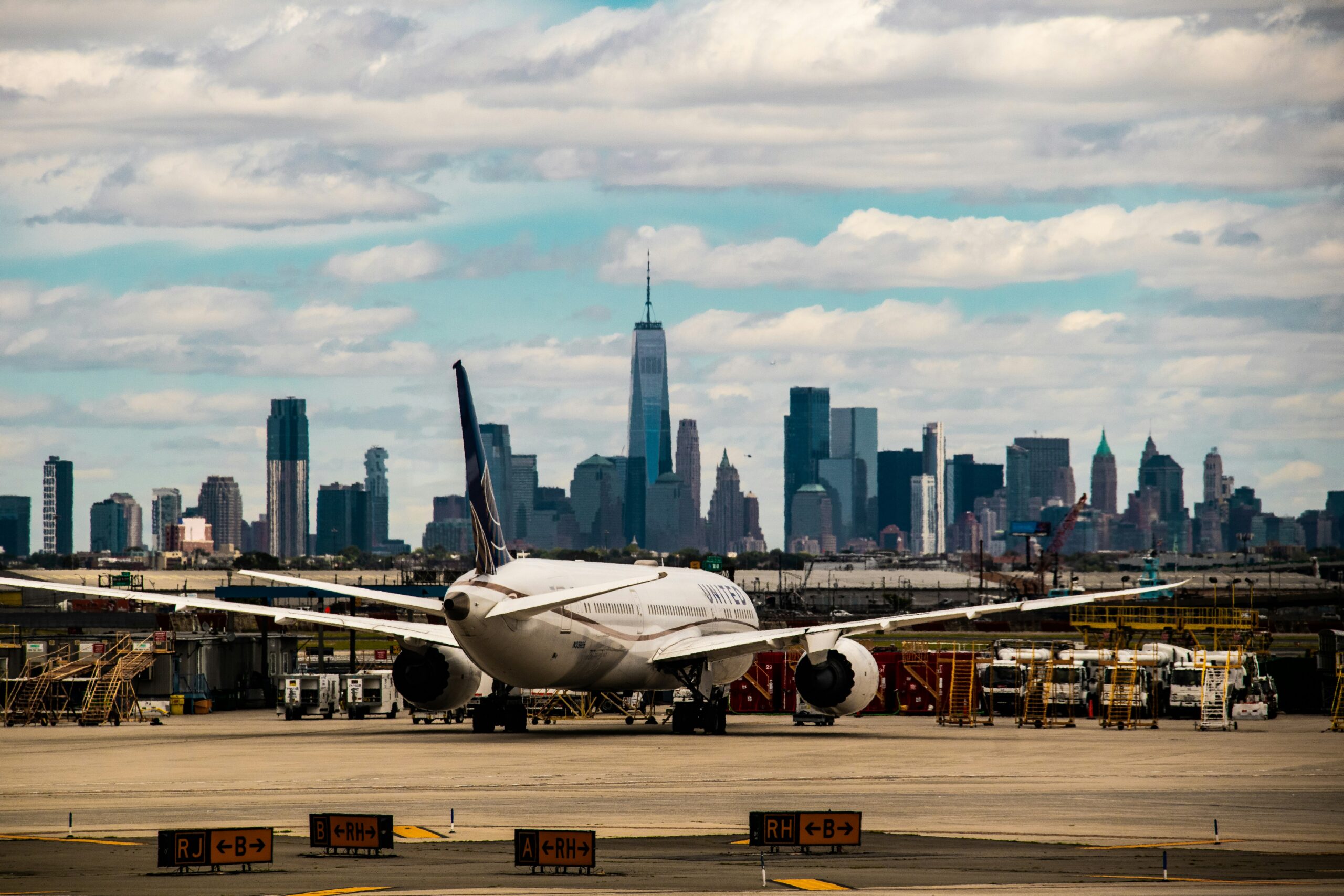
If you’re a frequent flyer navigating the New York airspace, you already know that Newark Liberty International Airport (EWR) can be a headache. But beyond the traffic on the Turnpike and the endless construction on Terminal B, there’s a quiet scandal happening right at the checkin counter.
Picture this: You weigh your checked bag in your living room. The digital scale reads 48.5 pounds. You breathe a sigh of relief, knowing you’ve safely skirted the airline’s strict 50 pound limit. You arrive at Newark, haul your suitcase onto the conveyor belt, and watch in horror as the digital display flashes 51.5 pounds. Before you know it, the gate agent is swiping your credit card for a $100 or sometimes even $200 overweight baggage fee.
You didn’t pack extra weight. You packed “phantom weight.”
According to a shocking new report from NJ Spotlight News, a staggering percentage of baggage scales at Newark are broken, miscalibrated, and routinely adding non-existent pounds to traveler luggage. While airlines are actively raising baggage fees and pointing fingers at the rising cost of jet fuel driven by the current Iran War, it turns out their faulty equipment is quietly functioning as a highly lucrative, undocumented revenue stream.
Here is everything you need to know about Newark’s phantom weight problem, the real math behind how much airlines are making off of it, and how you can shield your wallet.
The Details: By the Numbers
If you think this is just a minor glitch affecting a handful of travelers, the data paints a vastly different and infuriating picture. During the most recent tests conducted by the New Jersey Division of Consumer Affairs, EWR failed spectacularly compared to its sister airports across the Hudson.
-
A 27% Failure Rate: Out of 384 scales tested at Newark in October 2023, 105 failed inspection.
-
The Phantom Tax: 86 of those failed scales specifically gave readings that artificially added weight to passenger luggage, directly leading to unearned overweight fees.
-
Terminal B is the Epicenter: A massive 60% of the malfunctioning scales were located in Terminal B, the primary hub for long-haul international flights where overweight penalties are historically the most severe.
-
Zero Oversight: Because of “staffing issues,” New Jersey hasn’t inspected Newark’s scales since 2023.
-
A Newark Only Problem: Across the river, New York City officials conduct annual checks. At JFK, only 2 out of 670 scales failed recently. At LaGuardia, an impressive 0 out of 209 scales malfunctioned.
What This Means for You: The Bigger Picture
The Economics of “Phantom Weight”
Airlines love to issue press releases about the rising costs of operation. Just this month, majors like American, Delta, United, Alaska, and JetBlue universally announced plans to hike checked bag fees, hiding behind the excuse of fuel volatility caused by the Iran War. But let’s look past the PR fluff.
The Bureau of Transportation Statistics notes that U.S. carriers collected a massive $5.5 billion in baggage fees last year. So, how much of that is driven by miscalibrated scales? Let’s do the math.
We know that roughly 140 million passengers fly out of the NYC area’s three major airports annually. Newark handles about a third of that traffic, or roughly 46 million passengers. Industry averages dictate that 1 in 4 passengers checks a bag, leaving us with about 11.5 million checked bags at EWR every year.
With a 27% scale failure rate, roughly 3.1 million bags are weighed on faulty equipment annually at Newark. Since 82% of those failed scales (86 out of 105) actively add “phantom weight” against the consumer, we can estimate that over 2.5 million bags are unfairly weighed to the airline’s advantage.
Even if we conservatively estimate that only 2% of those bags are pushed over the 50 pound threshold purely by the scale’s error, that’s 50,000 bags hit with an unjust penalty. At an average overweight fee of $100 per bag, Newark’s broken scales are likely generating upwards of $5,000,000 a year in pure “phantom profit” for the airlines. To the massive legacy carriers, $5 million might look like a rounding error. But to the family of four heading out on a European vacation from Terminal B, a surprise $200 hit to the travel budget is devastating.
The Illusion of the Co-Branded Credit Card Shield
As points and miles enthusiasts, our first line of defense against ancillary fees is usually holding the right credit card. Cards like the Chase United Explorer or the Delta SkyMiles Gold American Express famously offer a “first checked bag free” benefit.
But here is the catch: A free checked bag is not an overweight checked bag. Standard airline credit cards waive the standard $35-$40 checking fee, but they still cap the weight at 50 pounds. If Newark’s scale adds 2 pounds of phantom weight to your 49 pound suitcase, your co-branded credit card will not save you from the $100 overweight surcharge.
The only true immunity against the phantom weight tax is elite status. Mid-tier and top-tier elites (think United Premier Gold or Delta Medallion Platinum) are typically granted an allowance of 70 pounds per bag. Unless a scale is catastrophically broken like the one referenced in the report that was off by a staggering 35 pounds your elite status buffer will render the phantom weight moot.
Your Strategy Moving Forward
Until the New Jersey Division of Consumer Affairs resolves its staffing shortage and brings Newark’s oversight up to par with JFK and LaGuardia, you need to play defense.
-
Invest in a Luggage Scale: Buy a $15 portable digital luggage scale on Amazon. Weigh your bag at home and take a photo of the reading.
-
Demand a Recalculation: If you get to Newark and your bag weighs significantly more than it did at home, do not blindly hand over your credit card. Politely but firmly inform the gate agent that you weighed it at home, and ask to place the bag on the scale at the next counter over.
-
Route Through JFK or LGA: If price and routing are competitive, book your flight out of LaGuardia or JFK. The data proves their scales are strictly regulated and highly accurate.
-
Pack Light: If you are hovering around 48 or 49 pounds, take out a heavy sweater or a pair of shoes and put them in your carry-on. Give yourself a 3 pound buffer strictly for EWR check-ins.
The Bottom Line
Airlines have spent the last fifteen years conditioning us to accept being nickel and dimed at every touchpoint of the travel experience. But there is a massive difference between a transparently annoying fee and an unearned penalty generated by broken infrastructure. The fact that Newark’s Terminal B, a gateway to the world is operating with unchecked, penalty inducing scales is unacceptable.
Have you ever been hit with a surprise overweight bag fee at Newark? Did you push back, or did you just pay up to make your flight? Let me know in the comments below!